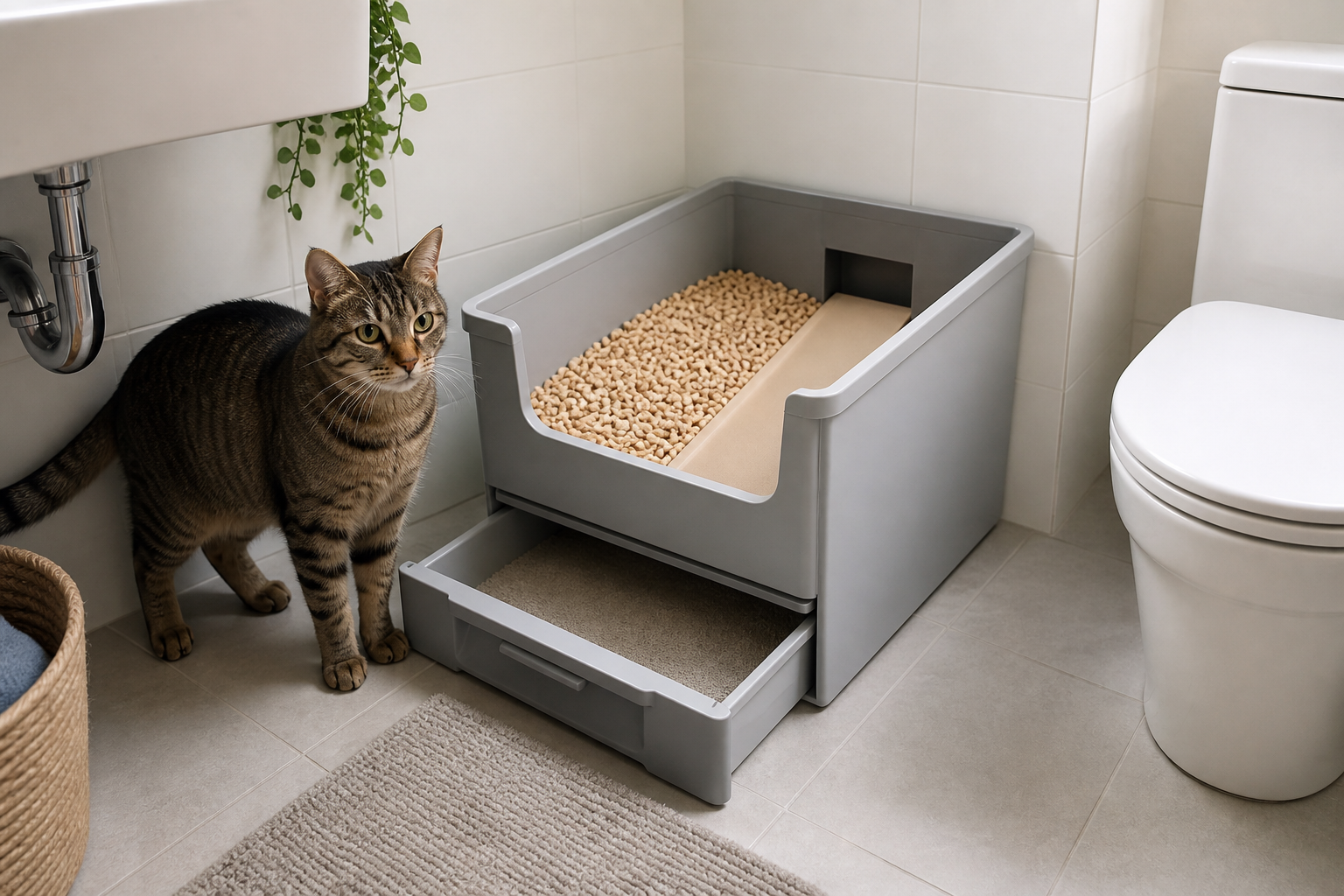
Compact DIY litter drawer
Catsift
A smaller litter box that separates pellet mess into a pull-out drawer.
Build the simple version now with store-bought bins. Keep clean pellets above, catch broken-down pellets below, and empty the drawer without dragging the whole box outside.
No motor
No app
No giant robot
Footprint
about 18 x 14 in minimum
Build time
about 1 hour
Parts
common bin-store parts
contact@catsift.com
How it works
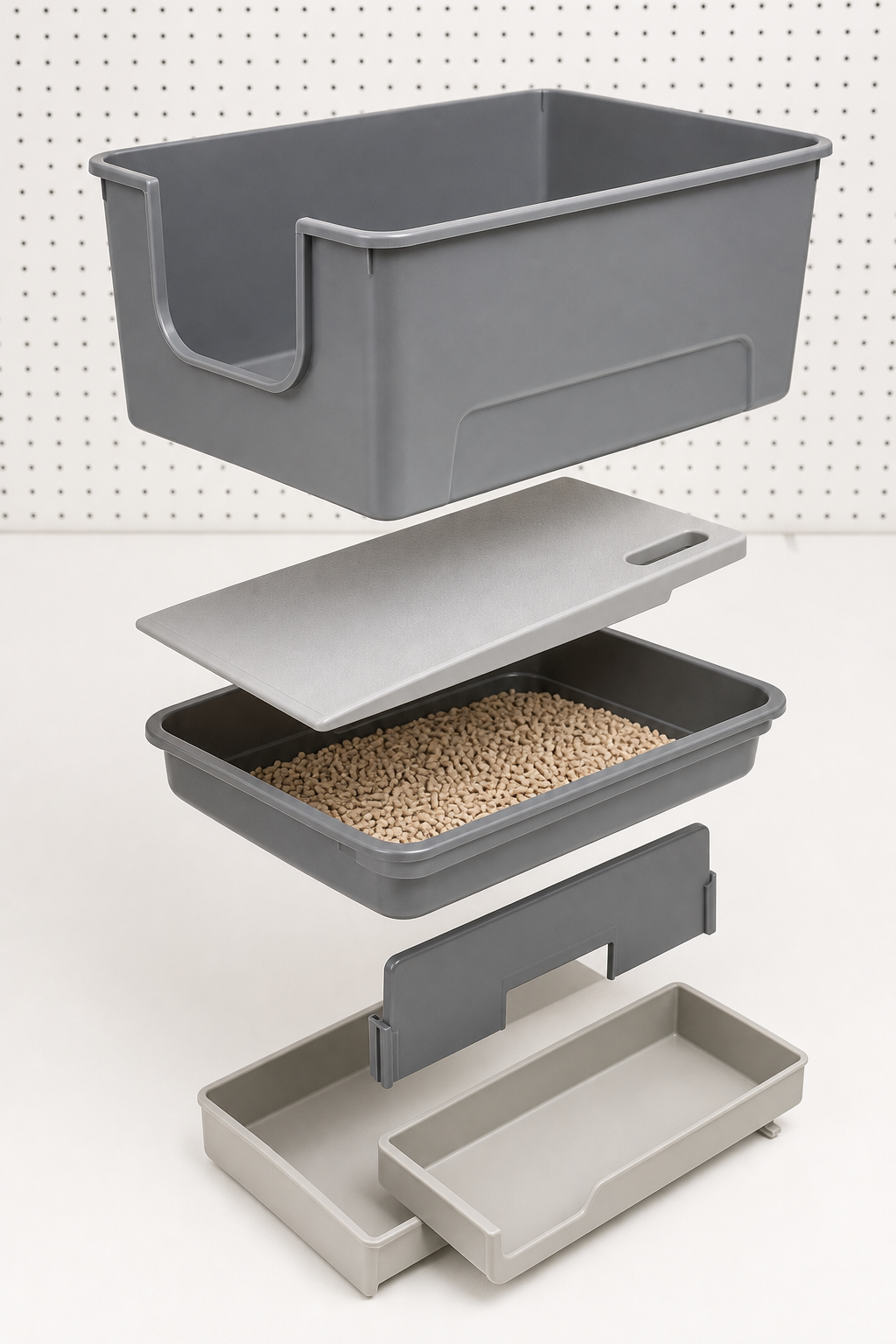
One box. Two levels. One drawer to pull.
Pellets stay on top
The cat uses the upper tray like a normal litter box, with a front cutout that stays easy to enter.
Broken pellets drop
Used pellet dust and loose debris fall through the drilled floor or rear drop slot into the lower tray.
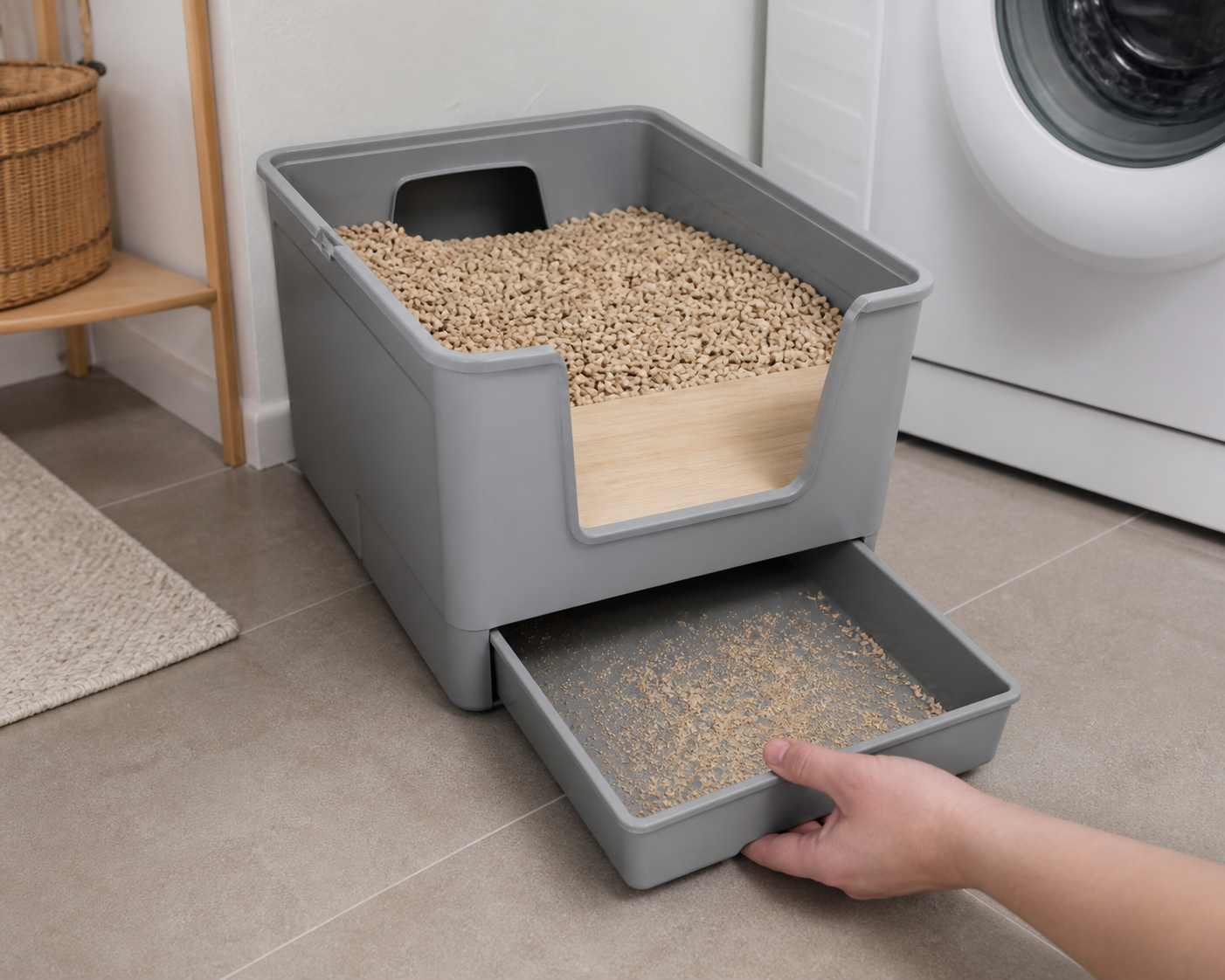
Drawer pulls out
Pull the shallow drawer, dump it, rinse it, and slide it back without lifting the whole box.
Why it feels better
Stop carrying the whole litter box just to dump the bottom mess.
Use pellet litter only; fine clay falls through too easily.
Keep at least about 18 x 14 inches of usable inside floor.
Round and sand every cut edge before the cat uses it.
Scoop solid waste daily; this is not a robot rake.
Build it now
The practical one-hour build.
Keep it compact, but do not make the inside cramped. A box cats reject is not compact; it is useless.
DIY today
Make the one-hour version
Use a bin, a shallow drawer, and a drilled panel. It is ugly if you rush it, but the cleaning idea works.
Prototype next
Cleaner molded layout
The product version should keep the same simple stack, with smoother edges, tighter drawer fit, and less visible bulk.
- 1
Cut the front entry low enough that the cat can walk in without jumping.
- 2
Raise the upper floor over the shallow drawer with the cutting board or plastic panel.
- 3
Drill drop holes or cut a rear slot so loose pellet debris can fall down.
- 4
Sand both sides of every cut, hole, and edge until nothing feels sharp.
- 5
Add a small lip around the pellet area so clean pellets stay on the upper tray.
- 6
Slide in the lower drawer, fill with pellets, and test by gently tilting the upper tray.
Shopping list
Boring materials are the point.
One plastic storage bin large enough for the cat to turn around
One shallow tray or drawer that slides under the main box
One cutting board or thin plastic panel for the raised floor
Drill with a 6 to 10 mm bit, utility knife, file, and sandpaper
Wood or paper pellet litter
Tape, small screws, rubber feet, and a pull handle if needed
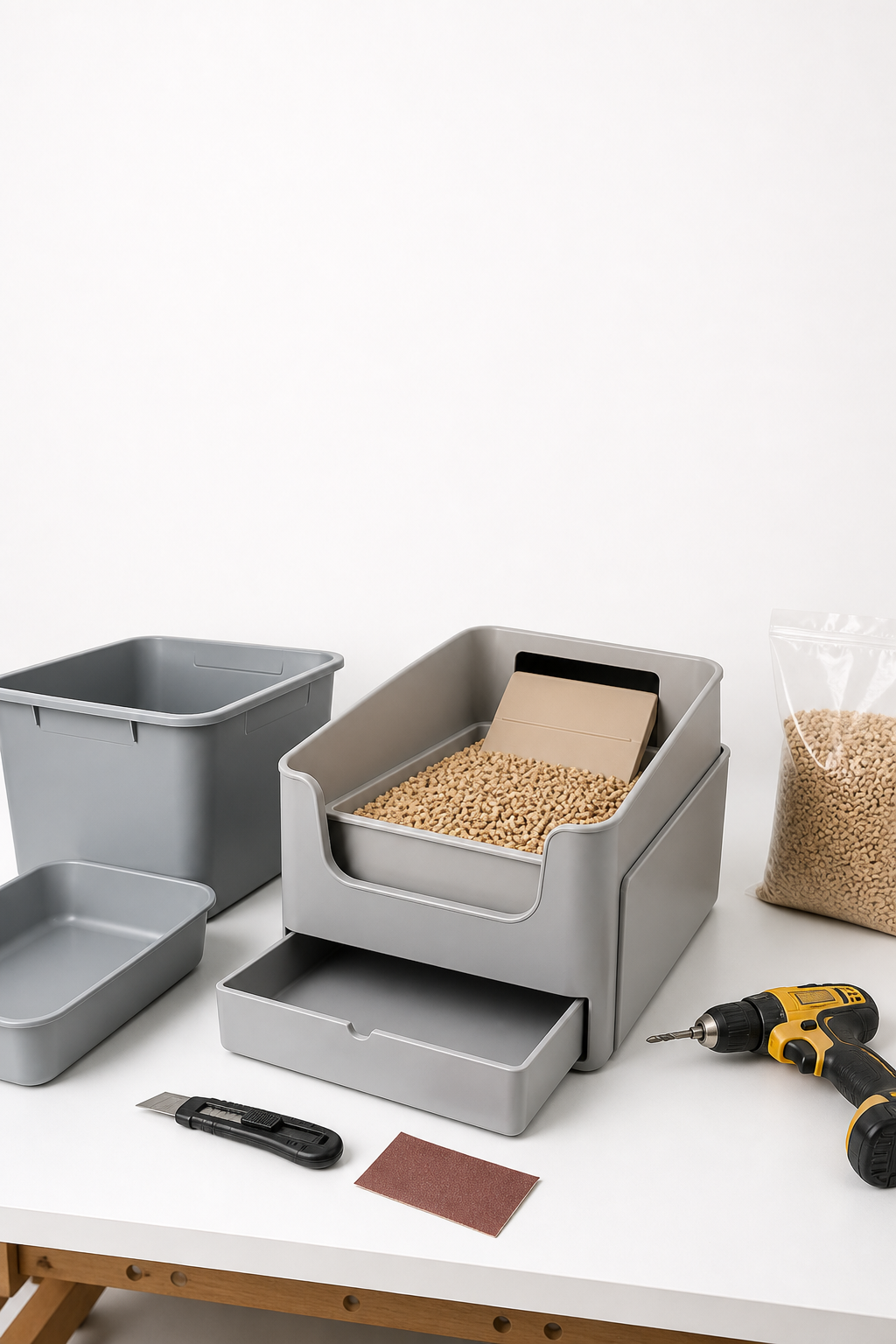
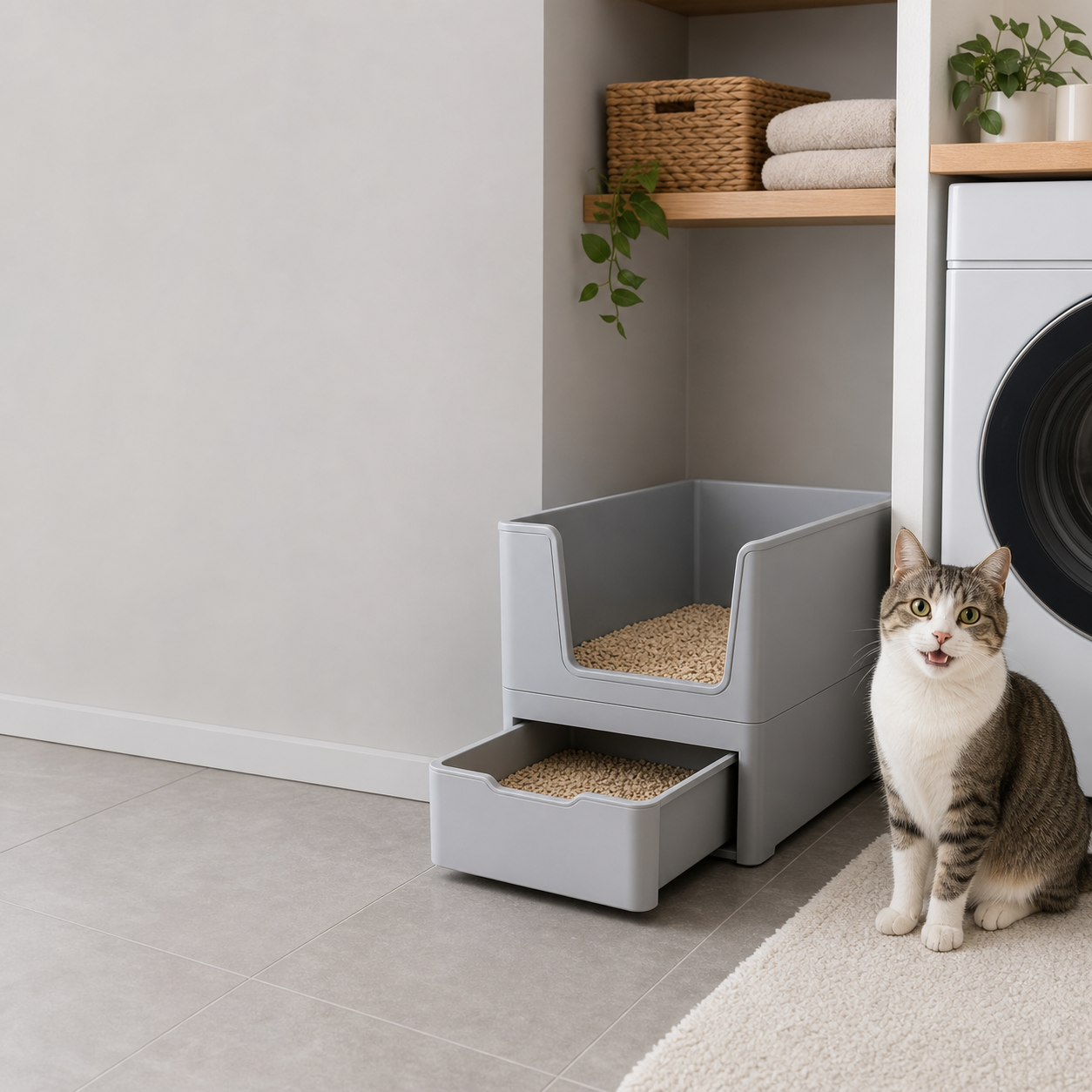
Pellet litter on top. Pull-out cleanup below.
Honest limits make the product better.
Catsift is not claiming magic. Fine clay or crystal litter will fall through too easily, and solid waste will not disappear on command. The useful win is faster daily cleanup with a compact drawer layout.
What still needs scooping?
Solid waste still needs daily scooping or a gentle tray tilt. The drawer is for faster cleanup of loose debris and broken-down pellet material.
Why pellet litter?
Pellets are bigger than fine clay grains, so they are easier to keep on the top tray. Used pellets break down and can drop into the lower drawer.
How small can I make it?
Do not make the top box too tight. Most adult cats need at least about 18 x 14 inches of usable floor so they can turn around.
Get the list
Want the exact build list or the first clean prototype?
Send a note and choose what you want: the DIY build list, prototype updates, or first-batch notice. The mailbox is live at contact@catsift.com and forwards to the admin inbox.
Build list first
Prototype updates only
First-batch interest
Private lead notes